
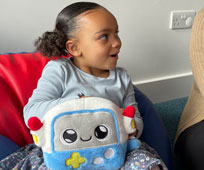
AI-powered toys that “talk” with young children should be more tightly regulated and carry new safety kitemarks, according to a report that warns they are not always developed with children’s psychological safety in mind. |
 |
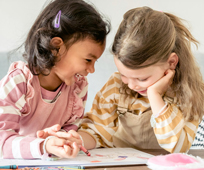
2026-02-26 Getting children to cooperate during play may depend less on their social skills than on what they are doing – especially if they are not already friends – a study suggests. |
 |
A new book calls for a rethink of what “counts” in comics, arguing that Western ideas about the medium have obscured the power of visual storytelling in the Global South. |
 |
2026-02-11 Actsure, a University of Cambridge spin-out, says its platform could save universities thousands in legal fees as they navigate new freedom of speech legislation.Read the story here. |
 |
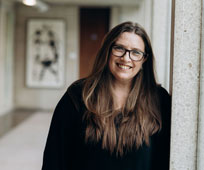
2026-01-08 Professor Clare Brooks has been appointed the next Head of the Faculty of Education at the University of Cambridge. She will succeed the current Head, Professor Hilary Cremin, in October 2026.Read the story here. |
 |
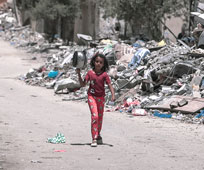
2026-01-07 A University of Cambridge-led analysis of how war has affected education and children’s lives in Gaza calls for an urgent increase in international aid to address both severe learning losses and the conflict's psychological effects.Read the story here. |
 |
2025-12-18 An emerging collection of award-winning short films, commissioned by Cambridge researchers, is being released as part of a project to widen conversations about genetic science, particularly among audiences who might otherwise ‘walk away’.Read the story here. |
 |
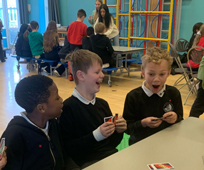
2025-12-17 An experimental project at a Cambridgeshire schools trust in which sixth formers stepped into the shoes of teachers has found that the approach can generate valuable forms of learning that complement more conventional lessons.Read the story here. |
 |
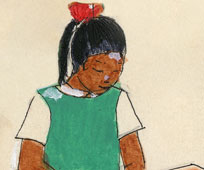
2025-12-15 A new version of the first ever major exhibition exploring how Black people have been represented in UK children’s literature visits Cambridge’s Central Library from 15 December.Read the story here. |
 |
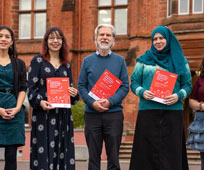
2025-12-04 A newly-published study shows strong public support for Religious Education (RE) in Northern Ireland to help pupils understand a wide range of different religious and non-religious worldviews, including Muslim, Humanist and atheist perspectives. Read the story here. |
 |