
It’s good to talk
(for ancient as well as modern language learners)

Ever tried to introduce yourself in Latin, or to start a discussion in Ancient Greek? Even if you are one of the minority of people who actually studied Classics at school, the answer is probably ‘no’; but there is a growing body of evidence that learners can master these languages with greater fluency and more enjoyment when they use them in conversation, just as students of modern languages do.
Much of that evidence has been compiled for the first time in a new book which gathers together the experiences of an international team of researchers, teachers and learners through 20 case studies describing ‘communicative approaches’ in classrooms and informal settings around the world. The methods range from simple question-and-response exchanges for beginners, through to ‘total immersion’ programmes in which students speak nothing but Latin or Greek. The book also features a striking study of two children who were raised as bilingual English and Latin speakers.
Teachers often say that they are still unable to read Latin without a dictionary – which people who learn modern languages would find extraordinary. We need to get away from that.
Steve Hunt - subject lecturer for the Classics PGCE, University of Cambridge.
Modern language specialists have long understood that developing students’ speaking and listening skills is an integral part of helping them to learn a new language. Conversation in Latin or Greek is, however, rarely used when teaching ancient languages. The experience of many students who learn these languages is one of memorising declensions and conjugations or poring over ancient texts and painstakingly deciphering meaning word by word. Some Classicists still feel that target language communication has no place in the ancient language classroom.
That belief seems counter-intuitive to the book’s two co-editors; Dr Mair Lloyd, an Associate Lecturer at the Open University and member of the Cambridge School Classics Project team, and Steve Hunt, subject lecturer for the Classics PGCE teacher training course at the Faculty of Education, University of Cambridge.
“Imagine if you tried to learn French but never got to experience using it,” Lloyd said. “We wouldn’t dream of teaching modern languages without using them in conversation, so it seems strange that there are many Latin and Greek classrooms where this never happens. Even though our aim may be to understand and appreciate ancient texts, it is more likely we will achieve this if we have experienced Latin or Greek as a working means of expression.”
“For some reason we have got this idea that Latin is something that we should learn relatively silently as a kind of deciphering exercise,” Hunt said. “Even after many years of study, teachers often say that they are still not able to read Latin without the use of a dictionary – which people who learn modern languages would find extraordinary. We need to get away from that.”
A growing number of Classicists seem to agree. The book showcases examples of ancient language communication in university and school classrooms, ancient language learning institutions, and online and informal settings; in the United States, South America, Europe and the United Kingdom. Each of the 20 chapters offers a snapshot of communicative practice and its challenges and benefits in a different context, as ‘action research’ findings.
The degree to which communication takes place in the ancient language across those settings varies. With younger students or teachers new to speaking, the methods often resemble those from beginner modern language lessons. These include, for example, simple activities such as showing pupils images and asking them to say what they see or asking for answers to very basic questions in Latin.
With older pupils and university students, whose courses typically involve the study of ancient literature, there is also a spectrum. One teacher in the US, for example, primes students who are about to study a complex text – such as a speech by Cicero – by running bite-sized dialogues in the classroom based on the vocabulary and structures they will encounter. “Students become accustomed to the kind of language being used, and when they meet the text itself, it’s just more of the same,” Hunt said. There are also university courses run entirely through the medium of the ancient language, where texts are never translated but ‘left’ – and discussed - in the original language.

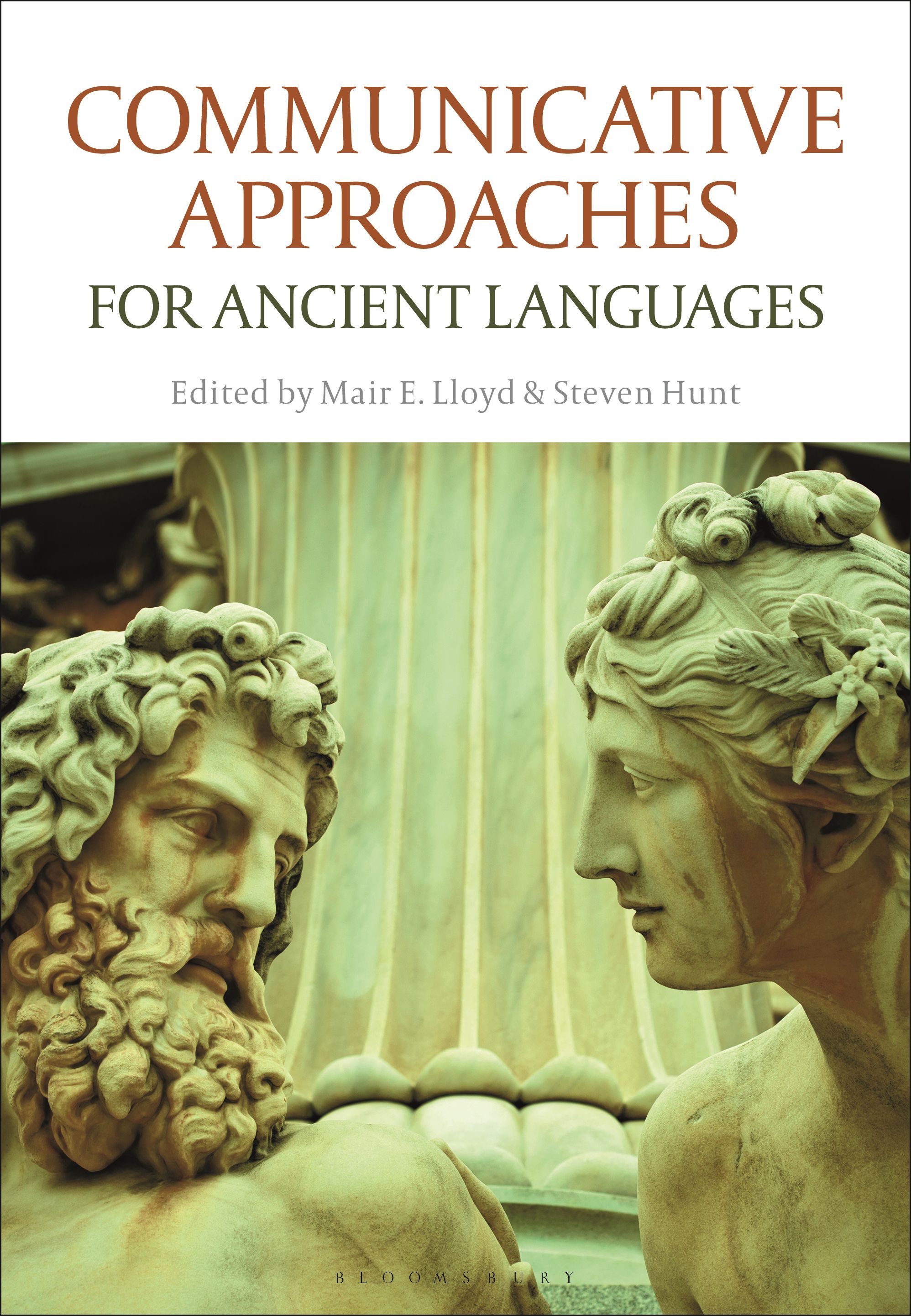
Image: Bloomsbury
Image: Bloomsbury
I have met young adults in their 20s who are better at Latin than I will ever be because they have been immersed in it.
Dr Mair Lloyd - associate lecturer, Open University
Another case of Latin immersion appears in the survey’s final case study, which analyses the language acquisition of two bilingual children who were raised to speak Latin and English from birth. The elder sibling spoke 140 Latin words by her second birthday, while the younger had 72 at 21 months, including his first (lac, or ‘milk’) at just 11 months. The researchers contributing this case found that as the children developed, both met the normal milestones that would be expected of young children acquiring any modern language: further evidence that Latin can, similarly, be mastered through talk.
While the book does not advocate replacing traditional modes of study, the editors do argue that learning how to speak Latin or Greek is a highly effective tool for equipping students to read ancient texts with fluency and pleasure. Two of the initiatives described at UK universities are student-led rather than part of the core curriculum, suggesting that an appetite for this type of learning exists among the next generation of ancient language specialists.
“I have met young adults in their 20s who are better at Latin than I will ever be because they have been immersed in it,” Lloyd said. “Our hope is that this book will inspire more teachers to try different approaches and see if they work. Some teachers may need considerable persuasion and we definitely need more evidence about what works and why; but there is enough promising news out there already to suggest that wider exploration of communicative approaches is long overdue.”
Communicative Approaches for Ancient Languages is published by Bloomsbury.
 Built with Shorthand