

Comic book of best practices aims to make comics festivals more autism-friendly

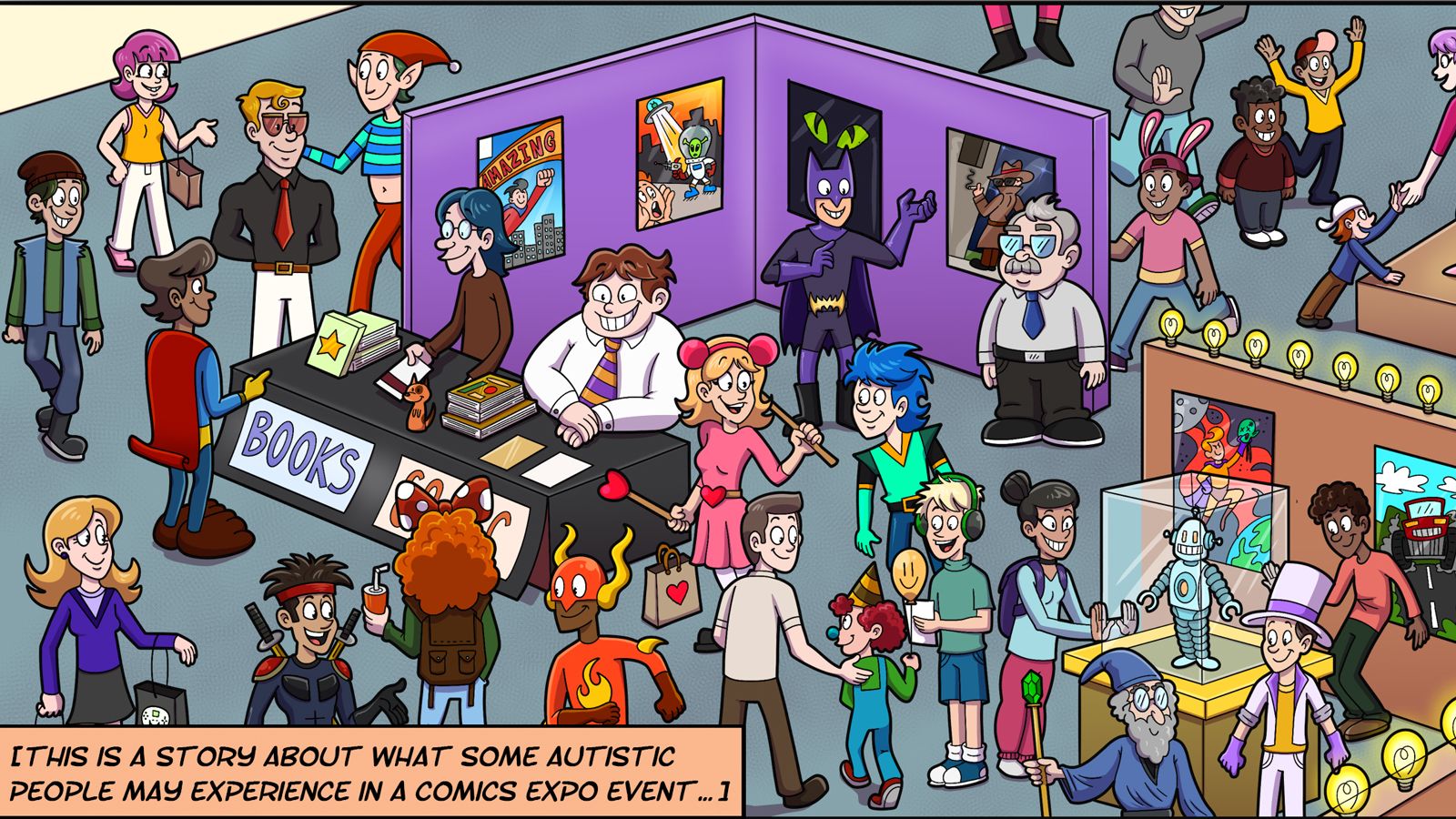
For many comic book fans, conventions and festivals offer a rare chance to share their passion with like-minded people. For autistic fans, however, those same spaces can be intensely challenging – crowded, noisy, unpredictable, and difficult to navigate.
A new set of best practices aims to change that. The guidance, which has been co-produced by autistic fans, comics professionals and Cambridge academics, sets out practical steps that festival organisers can take to make their events more welcoming for autistic visitors – from providing clearer information and calmer spaces to ensuring that staff understand their needs.
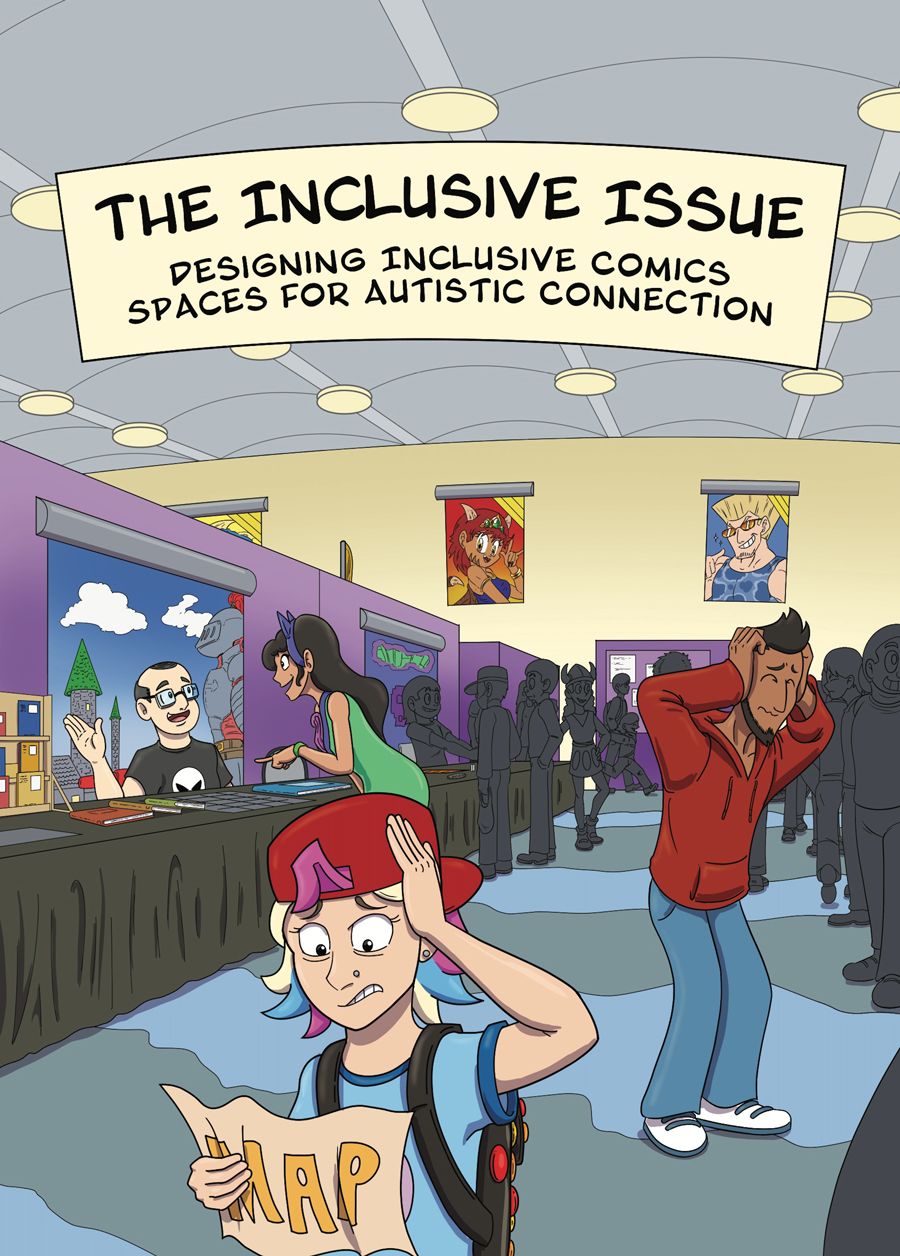
Unusually, the recommendations are being released not only as a written guide but as a 10-page comic. As well as representing the medium itself, the comic aims to provide organisers, volunteers and subcontractors working on comics festivals with a practical introduction to the experiences of autistic fans – and how to address them.

The best practices are the outcome of a year-long project at the University of Cambridge, “The Collaboration for Comics and Autism”. Its starting point was the recognition that comics are uniquely appealing to many autistic readers.
Research suggests that about 80% of children with Autism Spectrum Disorder (ASD) enjoy reading comics, compared with about 60% of neurotypical children. The rate is higher still among those with language disorders, suggesting that the clear visual material in comics is particularly useful and engaging for those who find verbal communication challenging.
Autistic people lose confidence at festivals because they don’t know what to expect – and sometimes they won’t go because they don’t know.
Fan conventions and festivals offer an opportunity for neurodivergent comics enthusiasts to connect with others who share their interests. Many participants in the Cambridge study reported, however, that a basic lack of awareness of their needs among organisers inadvertently makes these spaces unwelcoming instead.
Matt Burke, a former teacher and college leader who worked with students with special educational needs and disabilities (SEND), was one of the partners on the Cambridge project. He is also the Technical Director of the Lakes International Comics Arts Festival (LICAF), in Kendal, Cumbria.
“It’s hard to generalise but probably the most common problems autistic people experience at festivals and events are things like coping with crowds, noise, and the sheer drain on their social battery,” he said.
“There are some simple changes we could make. If I had to pick one, it would be describing events clearly so autistic fans know what they are letting themselves in for. Often, they lose confidence at festivals because they don’t know what to expect – and sometimes they won’t go because they don’t know.”

The project began in January 2025, with an online survey for autistic fans. The researchers were taken aback by the response this generated.
Jenny Gibson, Professor of Neurodiversity and Developmental Psychology at the University of Cambridge, said: “Normally we would expect a few dozen responses, but we had hundreds of people feeding into our research. That tells you how many autistic fans there are out there and how much appetite there is for change.”
The feedback was explored at two workshops at the University of Cambridge’s Faculty of Education, involving autistic illustrators and artists, comics publishers and neurodiversity advocates, among others. Gibson and her co-lead, Dr Joe Sutliff Sanders, also worked with partner organisations including the Comics Cultural Impact Collective, the Quentin Blake Centre for Illustration, Dekko Comics and LICAF.
They eventually identified about 40 potential ways to make comics festivals more autism friendly, which the best practices distil under a more concise set of general principles, including:
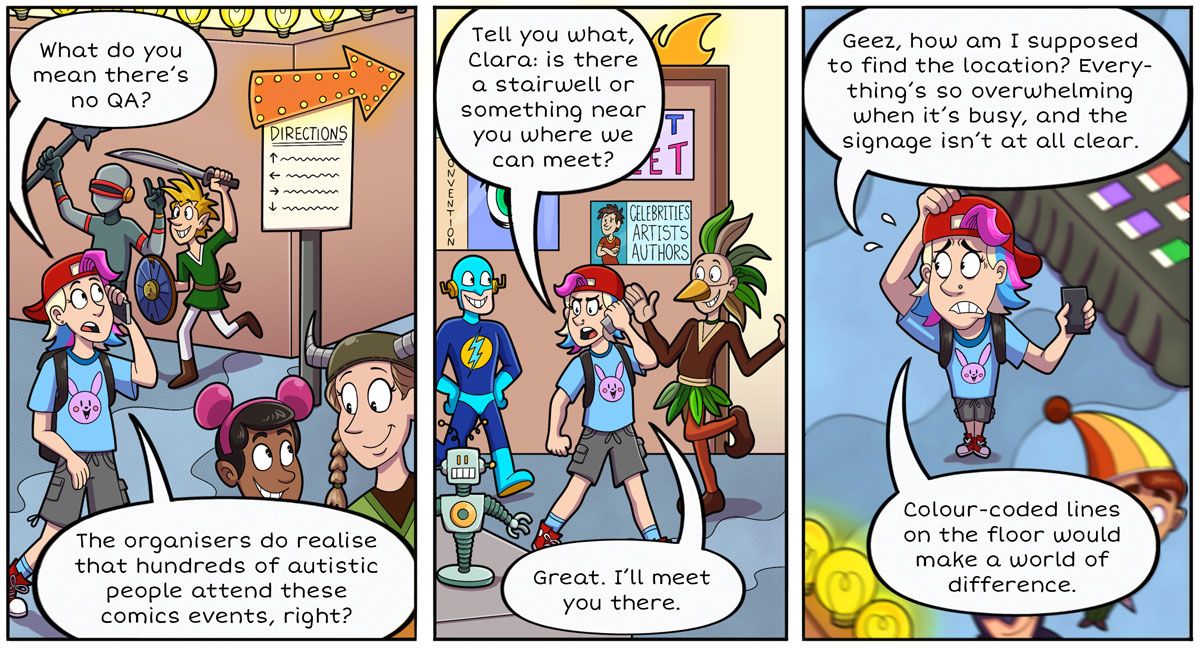
Creating a “readable” environment for autistic fans, for example using clear and consistent colour-coding, or visual navigation cues.
Providing clear information in advance, such as detailed event descriptions, accessible maps, and guidance on where support is available.
Designing for sensory comfort, for example by offering quiet spaces, spaces for stimming, or access to noise-cancelling headphones.
Training volunteers and staff in the basics of supporting autistic visitors and ensuring that responsibilities for handling extra needs are clearly assigned.
Supporting community building by creating online and social platforms for autistic fans, and by including autistic voices within festival programmes.
Rather than simply releasing a list of guidelines, the team chose to turn their recommendations into a comic, produced by the specialist publisher Dekko Comics. This follows a group of autistic characters as they navigate a fan convention.
“At the moment autistic fans are fixing the problems they encounter by themselves,” Sanders said. “We hope the new guidelines will build awareness and encourage change so that they don’t have to.”
The guidelines also emphasise that making events more inclusive for autistic people is likely to help others, such as disabled visitors, parents with young children, or fans from other countries. “The fundamental principles are not too complex,” Burke added. “Over time they should flow into the way that all festivals and events are managed quite naturally and improve the experience of all those attending.”
Download the guidelines here.