
Inside the children’s story hour that’s bringing Cambridge’s heritage language communities together

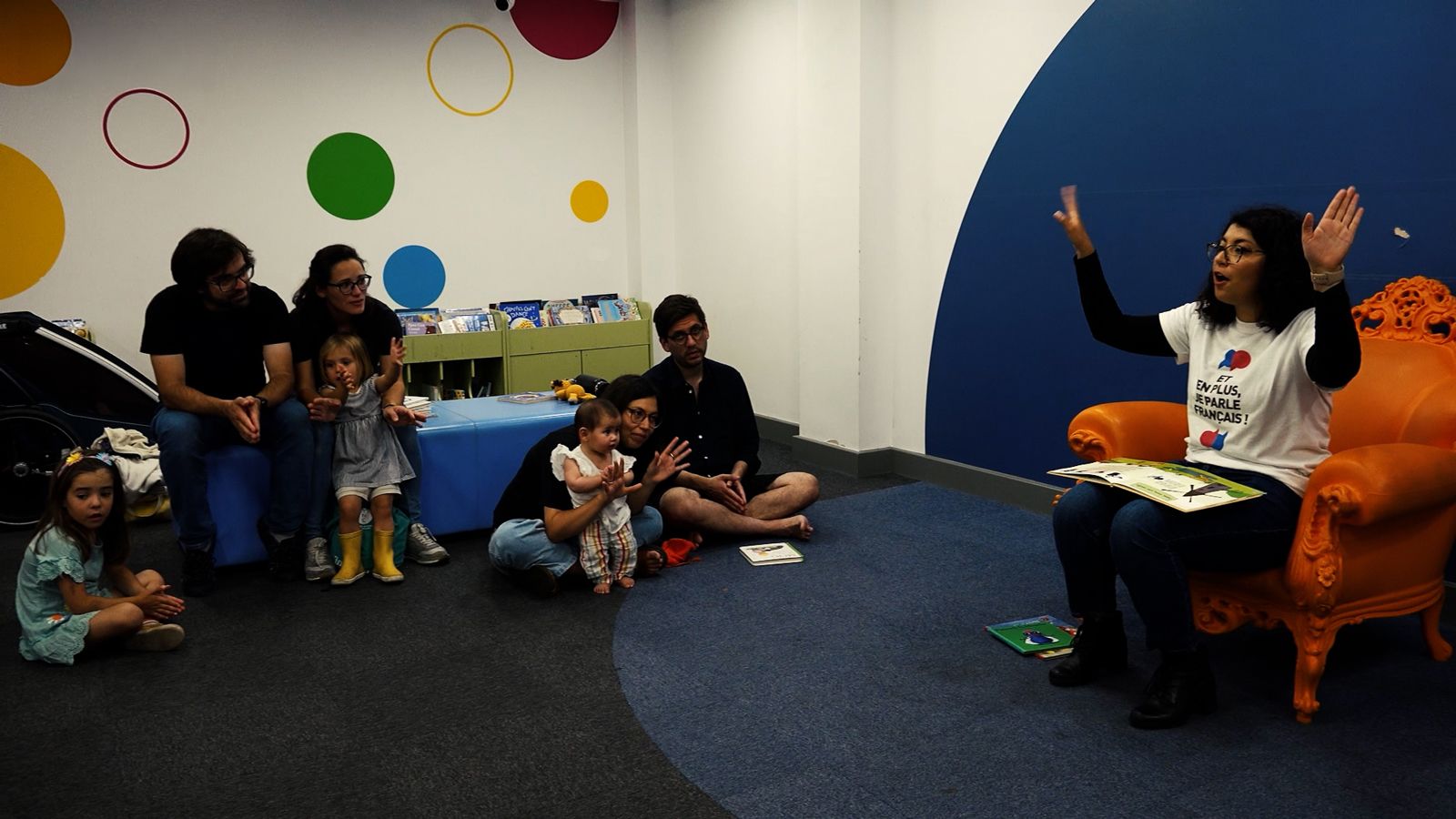
It is Saturday afternoon in Cambridge’s Central Library and a circle of young children has gathered around a woman seated in a large armchair. As she reads aloud from a picture storybook, the children are utterly absorbed, not just by the words and pictures, but by the sound of her voice and her gestures as the story unfolds.
At first glance, it resembles a scene from any library or nursery school across the UK, or for that matter, a classic children’s story-time programme. There is, however, one crucial difference: none of these stories are in English, and many of the children have never heard the language being read.
This is ‘Multilingual Storytime’: a new initiative developed by Cambridgeshire Libraries in collaboration with Cambridge Bilingual Groups (an umbrella organisation for community schools and the Cambridge Research in Community Language Education (CRiCLE) Network based at the University of Cambridge’s Faculty of Education.
The aim is to give children an early feel for different cultures, and for language itself. Each session brings together families from Cambridge’s various bilingual communities, alongside any other young library-goers who want to join in. Over an hour, children hear stories and rhymes in three different languages. Far from the quiet normally associated with libraries, the atmosphere is loud and lively.
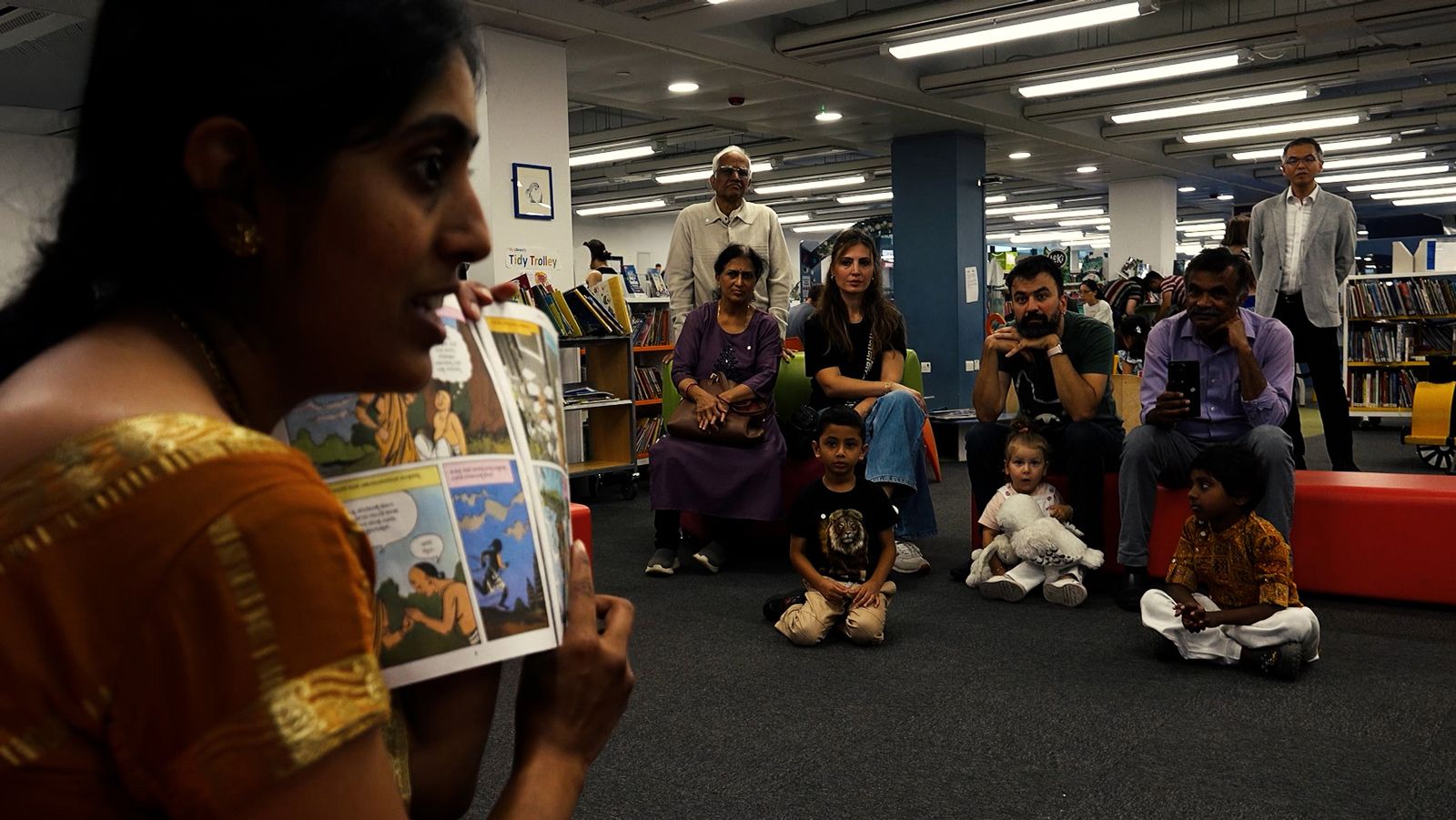
On this particular Saturday, about 25 children, from babies to primary-age students, listen to stories in French, Turkish and Kannada – a language spoken in Karnataka, India. Some know one of these languages well, but others are only just beginning to read, or younger than reading age.
People really get into it and it becomes a genuinely inclusive space where everyone is welcome.
“The idea is partly to bring people from different language communities together, but also to create opportunities for anyone to be exposed to different languages,” says Ana Silva, from Cambridgeshire Libraries. “People really get into it and it becomes a genuinely inclusive space where everyone is welcome.”
Multilingual Storytime reflects Cambridge’s exceptional linguistic diversity. School registration data for the city gathered in 2025 indicates that more than 130 different languages are spoken among local children. A 2022 City Council report found that around 20% of residents speak a second language.
The city has more than 30 heritage language schools and groups. These are usually volunteer-run weekend schools allowing students from bilingual backgrounds to learn about their culture and mother tongue. Cambridge is home to three Chinese schools, two Arabic schools, and Polish, Persian, Hungarian, Spanish, Japanese, Ukrainian and Tamil schools – among many others.

Research consistently highlights the benefits of learning a heritage language. As Cambridge Bilingual Groups record, as well as positively impacting children’s academic performance and literacy skills, it supports wellbeing, and strengthens their wider sense of belonging and identity. Exposure to different languages, even early on, also develops “language awareness” – an intuitive feel for how language works, acquired through rhythm, sound and experience. This, in turn, supports the development of strong communication and social skills.
Multilingual Storytime aims to offer a space where such language awareness can develop. Families from different language communities can also meet and share information and advice about the city’s various heritage language initiatives.
Understanding is not the only goal. It is also about building broader language awareness.
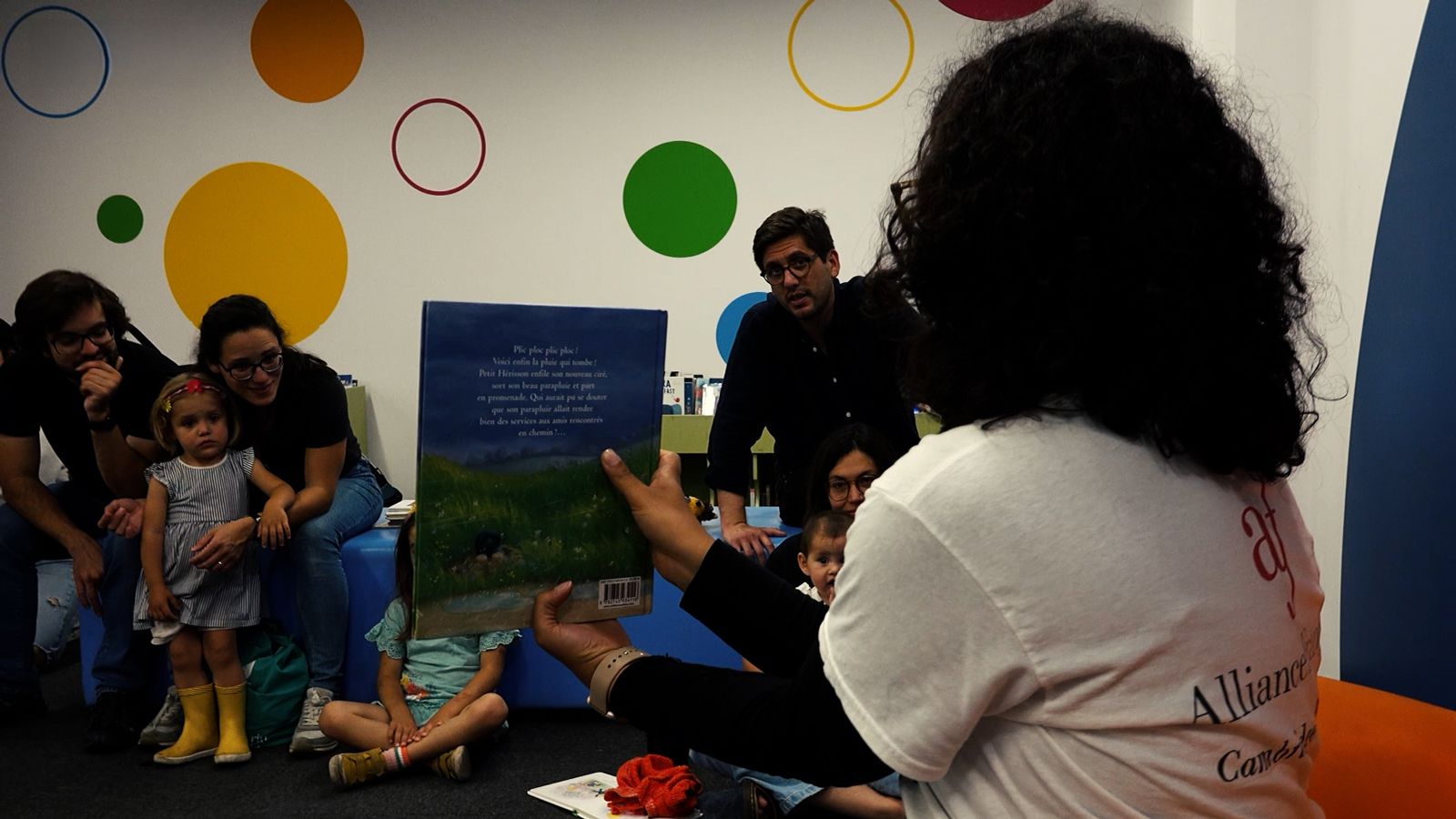
Despite not understanding every word, the children are riveted. “I use gestures, sounds, and point at pictures to convey meaning,” storyteller Jasmine Ben Lahoucine, from the Alliance Francaise, explains. “At this age, children understand way more than we think. It’s great to see the curiosity in their eyes.”
“As a French person, it feels important to have representation and a sense of community,” she adds. “It’s great to see this cultural bridge happening.”
These sentiments are echoed by Zuzana Frankova, from the Slovak School in Cambridge: “It gives people identity and an opportunity to connect with their culture, or just another culture they find interesting,” she says. “Hearing Slovak in the UK helps children [from Slovak heritage contexts] to understand that this is normal, and not just something they do when they go to visit their grandparents.”
For Professor Yongcan Liu, from the Faculty of Education, the initiative’s success emphasises the fluid nature of language learning. It is, he explains, not just about grasping vocabulary and grammar but about acquiring a linguistic and cultural “repertoire” through signs, cues and experiences.
Dr Anke Friedrich, from Cambridge Bilingual Groups, adds: “Adults quickly get bored when they don’t understand what is being said, but it’s different for children. They are still developing their language skills and are curious about the whole situation. Understanding is not the only goal. It is also about building broader language awareness.”

In the UK, where heritage language learning is relatively informal, such activities are an important part of a wider network that Liu says is vital to supporting heritage language education. “Weekend community schools, like those we see around Cambridge, are playing an important role in the education of young British citizens with unique learner characteristics,” he says. “We can help them to thrive through what we call ‘systems convening’: bringing together families, schools, libraries, universities, community groups, businesses, local government and others.”
Another initiative, separate to Multilingual Storytime and designed with systems convening in mind, is the Cambridge Community School Leadership Forum, set up under the auspices of the University’s Centre for the Study of Global Human Movement, and co-run by Cambridge Research in Community Language Education (CRiCLE) and Cambridge Bilingual Groups. It enables headteachers and community school leaders to discuss issues of language, heritage and migration, and to develop strategic approaches to supporting multilingualism.
In line with the concept of systems convening, its scope is now widening. The Forum, CRiCLE and Cambridge Bilingual Groups are building links with local government and businesses, to explore how heritage language education in Cambridge can be supported on a cross-sector basis and placed on a more sustainable footing.
The Forum’s third meeting, in November 2025, focused on working with local libraries and local government. Fittingly, it was held at the Central Library, where a new Arts Council-supported facility ‘Everyspace’, has been created to host community initiatives.
Among its functions will be providing a home for Multilingual Storytime. “It’s all part of an ecosystem we are trying to create to sustain heritage language education,” Liu adds.
Images and video in this story produced by Justin Hodgett. With thanks to Cambridgeshire Libraries for their support!